- Open Banker
- Posts
- The Economic Case for Credit Card Interest Rate Caps
The Economic Case for Credit Card Interest Rate Caps
Written by Elena Botella

Open Banker
January 27, 2026
In partnership with

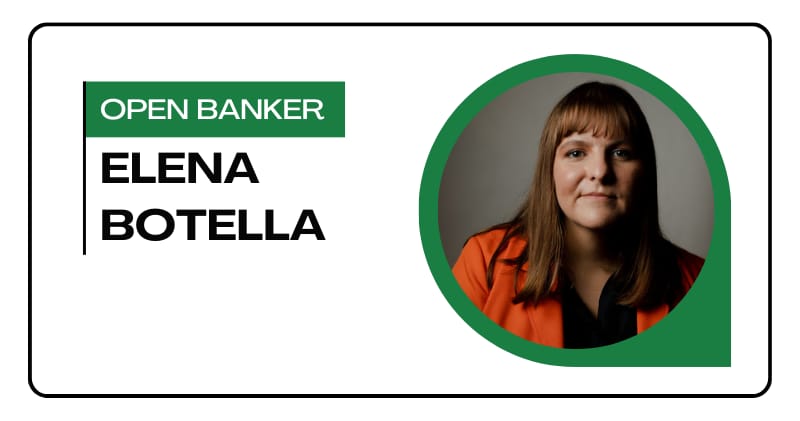
Elena Botella is a former senior manager in Capital One’s credit card division, and the author of Delinquent: Inside America’s Debt Machine, published by University of California Press.
Open Banker curates and shares policy perspectives in the evolving landscape of financial services for free.
On January 9, Donald Trump called for a one-year 10-percent cap on credit card interest rates. I was unsurprised by the immediate, and intense, industry blowback. But despite industry claims, the reality is that there is a strong economic basis for capping credit card interest rates.
Partly Right, Mostly Wrong
Conventional wisdom within the financial industry is that a 10-percent cap is too low. In this, they are right.
A 10-percent cap, indeed, would make it impossible for credit card issuers to profitably lend to most Americans. According to data published by the CFPB, in early 2025, only two of the 25 largest credit card issuers offered any credit card with a non-promotional purchase interest rate below 10%. None of the three largest credit unions offered a card with a purchase interest rate below 10%, suggesting the economics simply don’t work for a 10% cap, even with taxes out of the equation. Scott Simpson, President and CEO of America’s Credit Unions, shared his perspective on the 10% cap.
But the banking industry’s claim that any interest rate cap would hurt consumers isn’t borne out by history or by data. Appropriate regulation can solve market deficiencies. Cities and states around the country have raised their minimum wages while maintaining low unemployment rates, by setting minimum wages at levels where employers can still profitably create jobs, but where workers are paid more fairly for their contributions to the economy. Similarly, a thoughtful credit card interest cap could save consumers billions while preserving broad — although not universal — access to credit. Financial industry lobbyists are correct in identifying that in order to profitably lend to the customers with the highest odds of defaulting on their loans, bank must charge high interest rates. This argument usually ignores the hardship banks create when they lend to consumers who are already overextended. When I interviewed consumers for my book Delinquent: Inside America’s Debt Machine (University of California Press: 2022), I found that consumers generally turned to credit cards because they were in a financial crunch. But the consumers who ended up defaulting on their credit cards said their credit cards turned their financial crunch into a financial catastrophe.
Rates are Rising and Competition is Falling
For much of the 20th century, most states capped maximum loan interest rates between 12% and 18%; the 1978 Supreme Court case Marquette v. First Omaha limited the ability of states to impose their own caps, and credit card interest rates have been largely unregulated since then. In the aftermath of Marquette v. First Omaha, both interest rates and total debt levels skyrocketed.
In the past decade credit card interest rates have continued to climb, even as credit card default rates remain steady. And, in 2025, credit card debt hit a record $1.23 trillion. Credit card interest rates have almost doubled in the past ten years, from an average of 12% to 21%. Some of that change was driven by interest rate levels set by the Federal Reserve. But the CFPB has estimated that roughly half of the rise in credit card interest rates was driven by rising lending margins from banks — e.g. the difference between the APR banks charge and the prime rate. The same report found that credit card default rates stayed steady throughout the decade, and that interest rate margins are rising across all credit tiers. Rising interest rates are not the result of default or other risk management: they are the result of lenders seeking higher profits. A good proof point? Banks have plowed the additional revenue from higher interest rates into aggressive marketing campaigns and greater shareholder profits.
Lack of effective competition has made it easier for banks to leverage price inelasticity on credit card interest rates. Borrowers have difficulty comparison shopping for low-cost credit, resulting in higher prices for consumers. Credit cards are generally advertised with an APR range: customers often don’t know the APR they’ve been assigned until after they apply. And each credit card application comes with a card inquiry, dinging the customer’s credit score, and disincentivizing consumers from shopping around. Third-party credit card comparison sites promise to help Americans find the best product, obscuring the fact that their rankings are driven by how much companies are willing to pay for the top spot.
While mortgage lenders and auto lenders compete by trying to offer the lowest interest rates, credit card issuers compete on brand dominance. A 2025 study by researchers at the University of Pennsylvania and the Federal Reserve found that card issuers spend 1–2% of assets annually on marketing — roughly 10 times the rate of the rest of the banking sector. This marketing blitz isn’t just about visibility; it’s about pricing power. The researchers found that the credit card companies with the highest marketing budgets successfully command higher risk-adjusted APRs than their competitors. This pricing power is confirmed by a 2024 report by the CFPB that found that the 25 largest credit card issuers charged interest rates that were 8 to 10 points higher than small and medium size banks and credit unions to consumers with the exact same credit scores. Credit unions and regional banks that strive to offer customers lower prices can’t compete—to match the "marketing blitz" of the giants, they would have to raise the very rates they are trying to keep low. The top ten largest credit card issuers now control 82% of the market; economists have estimated this oligopoly has allowed the large banks to charge interest rates that are between 3 and 8 percentage points higher than one would expect in a fully competitive market.
Credit card marketing heavily emphasizes credit card rewards and largely ignores the price of credit, encouraging consumers to evaluate offers purely on the basis of perks without consideration to APR. But for the millions of consumers who carry a balance, the cost of interest far exceeds the value of the rewards. Americans pay $120 billion annually in credit card interest — roughly $900 per household — and receive roughly $35 billion in rewards. In an era where families are tightening their belts and seeking cheaper alternatives for every other product, the credit card market remains a "black box" where Americans struggle to figure out if their credit card interest rate is competitive.
The end result? Borrowers often end up getting high priced credit cards, even when they could qualify for much lower interest rates.
Reckless Lending Practices Hurt Working Families
Lawmakers have historically recognized that banks should lend responsibly, i.e. to consumers with the ability to repay their debts. Mortgage lenders are required by law to consider a consumer’s credit history and verified income to consider their ability to make monthly payments on a mortgage. Similar laws exist for auto lenders and credit card companies. These policies reflect a recognition of the hardship families face when they default on loans, including harassment by debt collectors, brushes with the court system, and garnished paychecks.
But excessively high interest rates encourage banks to lend to consumers they know will have great difficulty in repaying their debt. Pegging operating and funding costs at around 9% of a customer’s credit limit, a 18% credit card interest rate supports a three-year customer default rate upwards of 1 in 4; a 24% interest rate supports a three-year customer default rate that is greater than 1 in 3; and a 36% interest rate supports a three-year customer default rate that is greater than 1 in 2.
“Ability to Pay” laws aren’t working as intended. After reviewing data from five of the largest credit card issuers, economists at the Federal Reserve Bank of Boston concluded that the Card Act’s Ability to Pay Rule “had no effect on bank credit decisions because actual credit limits are almost always substantially lower than reasonable ATP limits.” Their report found that a typical credit card customer has an actual credit limit of $7,763 but would be eligible for a maximum credit limit of $143,523 under Ability to Pay rules. Credit card interest rate caps more effectively restrain predatory lending practices than government-generated formulas, because banks themselves can more effectively identify the customers who are likely to default.
Commentators often point to the fact that subprime consumers have difficulty getting loans. That’s true to some extent, but ignores the fact that subprime consumers are often already highly indebted — and their difficulty in repaying their existing loans drives lower credit scores. An Experian report found that consumers with subprime credit scores have an average of $52,000 in total debt. Encouraging banks to lend to consumers who can’t service their existing debt doesn’t serve the public interest.
What’s The Right Level for a Credit Card Interest Rate Cap?
An effective credit card interest rate cap would preserve banks’ incentives to offer credit to broad cross-sections of consumers, while reducing the costs that most Americans pay.
The amount banks themselves pay to borrow money varies with the federal funds rate set by the Federal Reserve Board. Most consumers today pay variable credit card interest rates that are tied to the prime rate. Continuing to tie credit card interest rates to the prime rate or federal funds rate would reduce the risk faced by both consumers and borrowers, by preventing wild swings in credit access year-to-year.
Even returning to 2015 level interest rate margins — roughly prime + 10% — would save consumers $32 billion. That amounts to roughly $240 for every household in America.
Andrew Davidson, Chief Insights Officer at Mintel, speculated that the proposed 10% cap endorsed by President Trump is an opening anchor point for negotiation. As negotiations unfold, lawmakers should look at the data, which points to APRs far above what one would expect in a fully competitive market, and not rely exclusively on industry testimony.
The opinions shared in this article are the author’s own and do not reflect the views of any organization they are affiliated with.
Open Banker curates and shares policy perspectives in the evolving landscape of financial services for free.
If an idea matters, you’ll find it here. If you find an idea here, it matters.
Interested in contributing to Open Banker? Send us an email at [email protected].
AI in HR? It’s happening now.

Deel's free 2026 trends report cuts through all the hype and lays out what HR teams can really expect in 2026. You’ll learn about the shifts happening now, the skill gaps you can't ignore, and resilience strategies that aren't just buzzwords. Plus you’ll get a practical toolkit that helps you implement it all without another costly and time-consuming transformation project.